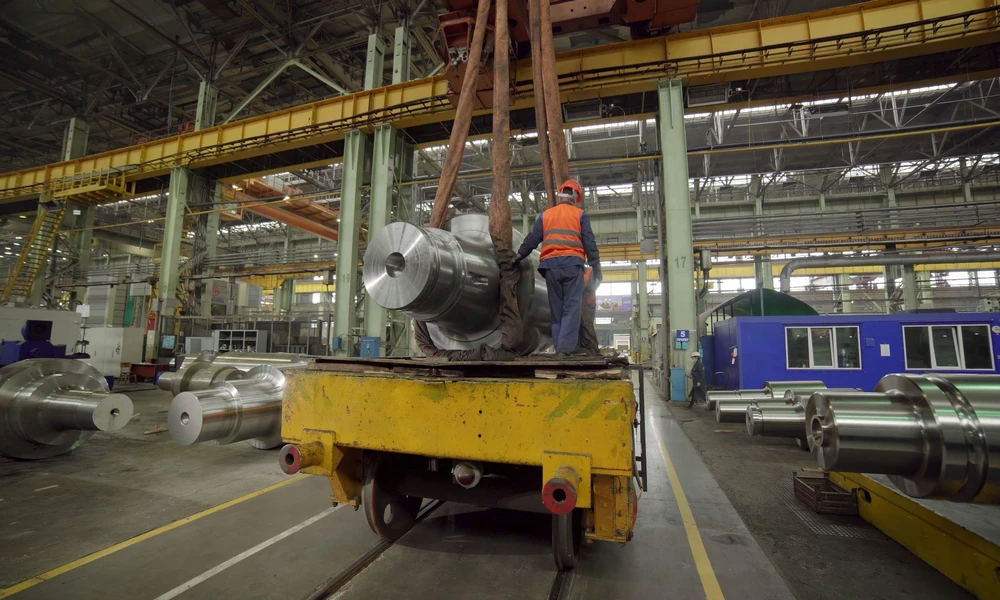
Moving industrial equipment or getting heavy equipment storage requires more planning than arranging transport from one address to another. Machinery may have substantial weight, unusual dimensions, sensitive components and specific handling requirements.
A relocation plan should account for what happens before the equipment leaves its current position, during transit and after arrival.
1. Has the Equipment Been Assessed for the Move?
Start with accurate information about the equipment. Weight, dimensions, centre of gravity, lifting points and operating requirements can affect the handling method.
Equipment documentation can help the logistics team determine suitable lifting and transport arrangements.
Incomplete information can lead to unsuitable equipment selection or changes at the site.
2. Can the Site Support the Relocation Activity?
Access routes need assessment before heavy equipment begins moving.
Check entrances, loading areas, floor capacity, door dimensions, overhead clearance and turning space. The route from the equipment’s current position to the transport point may present more constraints than the road journey itself.
The destination requires a similar assessment. A suitable vehicle cannot solve a site access problem.
3. How Will the Equipment Be Protected?
Industrial machinery can contain sensitive electrical, mechanical or precision components. Protection should reflect the equipment’s characteristics and the conditions expected during handling and transport.
Packaging, securing, environmental protection and lifting procedures need consideration as part of the relocation plan.
Preparation Checklist
- equipment dimensions and weight are verified
- lifting points and handling requirements are documented
- access routes have been inspected
- lifting and transport equipment matches the load
- protection requirements have been established
- destination access and placement arrangements are ready
This preparation can help the relocation team identify constraints before mobilisation.
4. Where Will Equipment Go If the Destination Is Not Ready?
Relocation schedules can change. A receiving facility may experience construction delays, commissioning issues or access restrictions.
Heavy equipment storage for plant relocation services can provide an interim option when machinery cannot move directly into its final position. The storage environment should suit the equipment’s condition and protection requirements.
Consider access, security, handling capability and environmental conditions before selecting a storage arrangement.
5. Has Reinstallation Been Included in the Plan?
The relocation does not necessarily end when the equipment reaches the destination.
Positioning, unloading, rigging, placement and reconnection may need coordination with the receiving site’s operations. Equipment may also require inspection before it returns to service.
Discuss these requirements early so the project schedule accounts for the complete move rather than stopping at delivery.
Planning the Move as One Process
Plant relocation services should address the movement as a connected sequence. Equipment assessment, site access, protection, transport, storage and final placement can influence one another.
A strong plan reduces the risk of discovering a major constraint after machinery has already been prepared for transport.
Contact Sin Chew Woodpaq to discuss your plant relocation services requirements, heavy equipment storage needs and the handling arrangements for your upcoming industrial move.