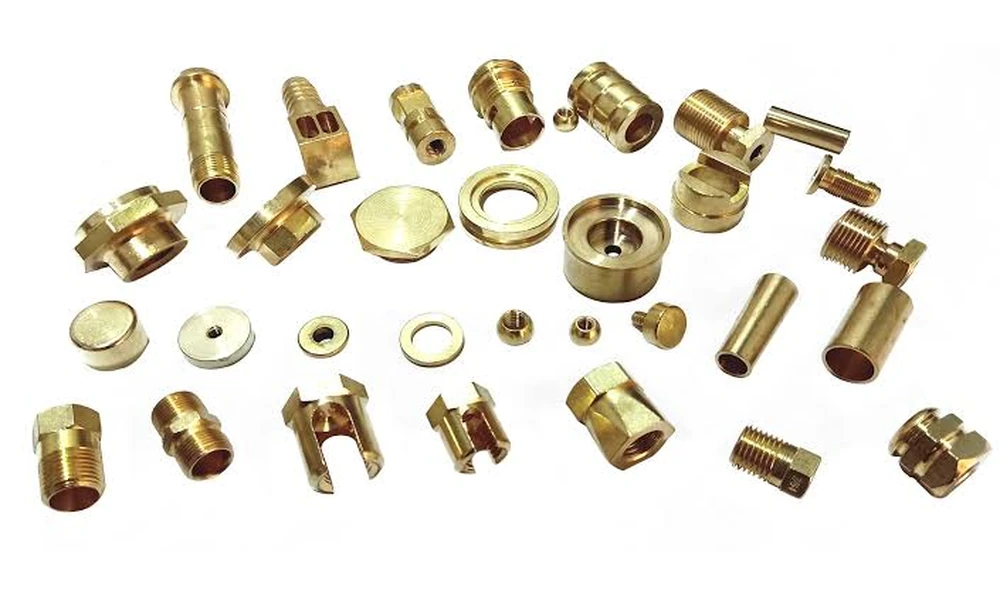
Brass has been a manufacturing material of choice across engineering applications for centuries, and its relevance to contemporary industrial production is not diminishing – it is growing. The combination of machinability, corrosion resistance, electrical conductivity, and antimicrobial properties that brass provides continues to make it the material of choice for precision components across plumbing, electrical, automotive, medical, and gas control applications worldwide. Understanding the drivers behind the rising demand for brass components manufacturers and what global buyers are looking for when they source precision brass parts helps suppliers and procurement professionals navigate an increasingly competitive and quality-conscious international market.
Why Brass Remains Irreplaceable in Precision Engineering
Brass manufacturers producing precision components benefit from properties of the alloy that competing materials have not been able to replicate at equivalent cost across the full range of functional requirements:
- Free-machining characteristics: the lead content of standard free-cutting brass grades (such as CW614N / CZ121) produces short chips during machining that prevent tool wrapping, enabling high-speed automated CNC turning at cutting rates that aluminium and stainless steel cannot match
- Corrosion resistance: brass’s inherent resistance to dezincification and general corrosion in water, air, and many chemical environments makes it the default specification for plumbing fittings, valves, and fluid control components across residential and industrial applications
- Electrical conductivity: brass’s conductivity – approximately 28% of pure copper – combined with its machinability makes it the standard material for electrical connectors, terminals, and contact components across the electronics and telecommunications sectors
- Antimicrobial surface properties: the documented antimicrobial effect of copper and copper alloys including brass is driving growing adoption in medical device components, hospital fittings, and public contact surfaces where infection control is a design requirement
Why Jamnagar Has Become the Global Hub for Brass Components
Brass components manufacturers in Jamnagar have built a concentration of manufacturing expertise, raw material access, and production infrastructure that positions the city as the dominant global supply source for precision brass parts. The cluster of brass parts manufacturers in Jamnagar benefits from:
- Proximity to the Kandla port, enabling efficient import of copper and zinc raw materials and export of finished components to international buyers
- A dense network of hundreds of machining units with complementary capabilities, enabling efficient subcontracting within the cluster for specialised operations
- Generations of accumulated technical expertise in brass machining among the workforce and management of established manufacturers
- Competitive manufacturing costs relative to alternative sourcing geographies including Europe and North America, without the quality compromises that lower-cost Asian alternatives sometimes involve
International buyers sourcing brass manufacturers in India for global supply chains consistently find that Jamnagar-based producers can meet the dimensional accuracy, surface finish, and material certification requirements of demanding industrial applications at price points that domestic European or North American production cannot match.
What Global Buyers Are Looking for in Brass Component Suppliers
The profile of what international buyers require from brass manufacturers has evolved considerably as quality management expectations have risen across global supply chains:
- Material traceability from mill certificate to finished component, confirming alloy composition and providing the documentary evidence that regulated industries require
- Dimensional compliance at tight tolerances – international precision engineering buyers typically specify threads to ISO or ANSI standards with tolerance classes that leave no room for ambiguity in the delivered part
- Surface finish consistency across production batches, particularly important for components used in fluid sealing applications where surface roughness directly affects seal performance
- Quality management system certification – ISO 9001 at minimum, with IATF 16949 increasingly expected for automotive supply chain participation
- Packaging and export documentation meeting destination country import requirements without additional processing by the buyer
Sectors Driving Brass Component Demand Growth
Global demand for precision brass parts manufacturers is being driven by several sectors whose growth is structural rather than cyclical. The global expansion of natural gas infrastructure for both domestic and industrial use drives demand for gas fittings, valve bodies, and pressure regulator components in brass. The electrification of vehicles creates demand for high-precision brass electrical connectors and bus bar components. The global growth of smart water metering drives demand for precision-machined brass meter bodies and fittings. And the post-pandemic increase in healthcare infrastructure investment is creating sustained demand for brass components in medical gas systems and hospital infrastructure.
Conclusion
The global demand for brass components manufacturers in Jamnagar and across India reflects both the enduring functional superiority of brass in its core application domains and the competitive manufacturing capability that India’s precision engineering sector has developed to serve international buyers. Organisations sourcing brass manufacturers in India for global supply chains find a combination of technical capability, quality management maturity, and cost competitiveness that makes Indian brass component supply a structurally sound procurement decision rather than merely a short-term cost reduction measure. This is particularly valuable for industries that also depend on electrical components manufacturers, where precision-machined brass parts, reliable electrical conductivity, corrosion resistance, and consistent dimensional accuracy are essential for ensuring dependable performance across electrical, electronic, and industrial equipment applications.