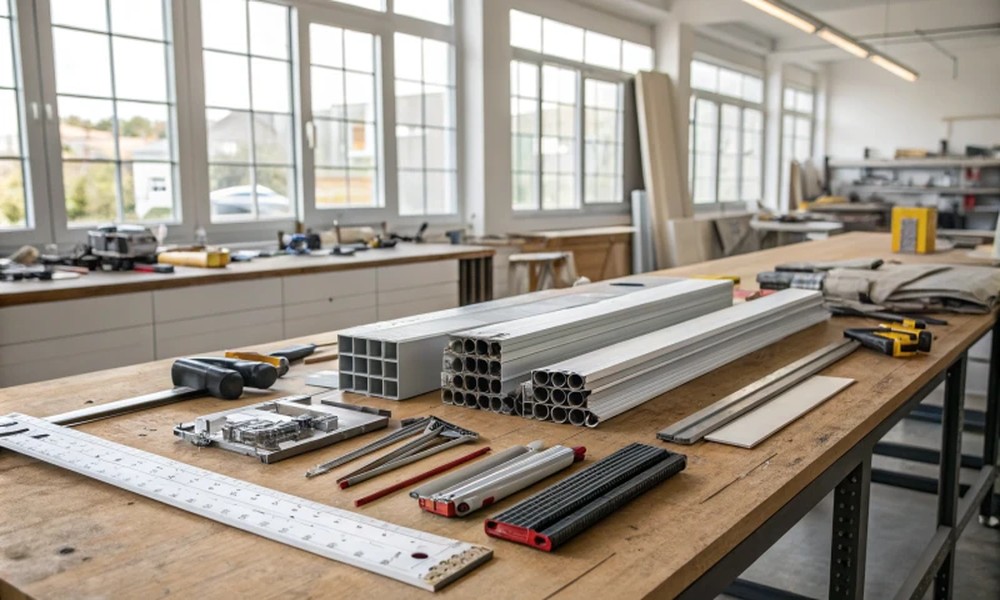
Aluminium profile systems are widely used in UK industries for automation frames, workstations, conveyor systems, and bespoke engineering projects.
While their modularity and ease of assembly are major advantages, it is equally important to consider load and strength requirements when specifying profiles. Understanding these factors ensures that structures are safe, durable, and fit for purpose.
Why Load and Strength Matter
Aluminium profiles, particularly T‑slot systems, are designed to be lightweight yet strong. However, improper selection or underestimating load requirements can lead to:
- Sagging or deformation under heavy loads
- Reduced lifespan of the structure
- Safety hazards in industrial or laboratory environments
By carefully considering the weight, stress points and intended use, designers can avoid these issues and create reliable structures.
Key Considerations for Specifying Profiles
1. Load Type
Determine whether the structure will bear:
- Static loads: Constant weight, such as equipment or work surfaces.
- Dynamic loads: Moving loads, such as conveyor items or robotic arms.
- Point loads: Concentrated weight in specific areas, e.g., heavy machinery mounted on a frame.
Each type of load affects which profile size and thickness are most suitable.
2. Profile Size and Cross Section
Larger profiles with wider cross-sections can support higher loads and resist bending. Choosing the correct profile size is critical for stability and durability.
3. Frame Height and Span
Long spans between supports can reduce structural strength. Adding intermediate supports or selecting profiles with higher rigidity can mitigate sagging.
4. Connectors and Fasteners
High quality brackets, joining plates and fasteners are essential to maintain structural integrity, especially in high-load or dynamic applications.
5. Environmental Factors
Consider exposure to moisture, vibration, or chemicals. Aluminium is corrosion-resistant, but additional finishes or reinforcements may be needed in harsh environments.
6. Safety Margins
Design frames with a safety factor to account for unexpected loads, overuse, or future expansions. Conservative planning helps prevent failure and extends the life of the structure.
Applications Where Load and Strength Are Critical
- Automation Frames: Support robotic arms, sensors, and moving components that exert dynamic loads.
- Conveyor Systems: Carry products of varying weights along assembly or distribution lines.
- Workstations and Benches: Hold tools, equipment, or machinery while remaining stable and ergonomic.
- Industrial Enclosures: Protect sensitive machinery while sustaining their own weight and any mounted accessories.
In each case, understanding the load requirements ensures the aluminium profile system performs safely and efficiently.
Frequently Asked Questions
Can aluminium profiles handle heavy machinery?
Yes, provided the correct profile size, thickness, and connectors are used for the expected load.
How do I account for dynamic loads?
Dynamic loads require profiles with higher rigidity and secure fastening to resist movement and vibration.
Are aluminium frames suitable for outdoor or humid environments?
Yes. Aluminium’s corrosion resistance is high, but anodised or coated finishes offer extra protection where needed.
Do I need engineering calculations to specify the right profiles?
For heavy duty or complex structures, it’s recommended to perform load calculations or consult with an engineer to ensure safety and reliability.
Final Thoughts
When specifying aluminium profile structures, considering load and strength is essential for safety, longevity, and performance. Evaluating the type of load, profile size, span, connectors, and environmental factors allows designers to build robust and adaptable structures.
With careful planning, aluminium profile systems offer the perfect combination of modularity, strength, and versatility for UK industrial, laboratory, and workshop applications.